

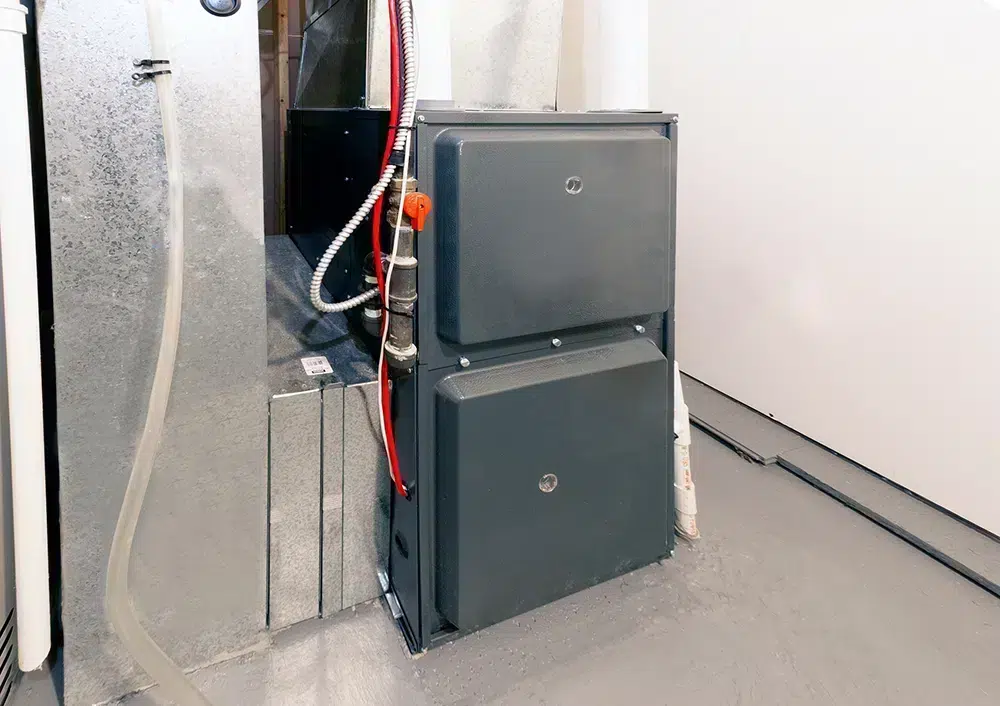
What Is a Dual-Fuel HVAC System?
Traditional HVAC systems generally consist of an air conditioner and a furnace. A dual-fuel system is similar except that it has a heat pump instead of a standard AC. The term dual-fuel comes from the fact that the system can provide electric heating with the heat pump or gas heating with the furnace.
Heat pumps and standard air conditioners use the same process to cool a house and work just as effectively as one another. The difference is that a heat pump has a reversing valve that allows it to switch the direction the refrigerant flows through the system to provide heating as well. When cooling, cold refrigerant captures heat from within the house, and the heat then gets dispersed outside. The process works oppositely when a heat pump is heating, meaning it captures heat from outside and brings it inside.
Comparing Dual-Fuel and Conventional Heat Pump Systems
The fact that a heat pump can provide effective heating may make you think that there’s really no point in also having a furnace. Nonetheless, dual-fuel systems have some advantages over conventional heat pump-only systems. One concern in a desert climate is that the nights can get so cold during the winter that a conventional heat pump may not always heat effectively enough to keep the house fully warm.
When the temperature is below 40 degrees, ice also starts forming on the coil in the outdoor unit. That means the heat pump occasionally needs to defrost. It does this by activating the reversing valve so that hot refrigerant flows outside to the coil. The only way for the heat pump to defrost is by basically switching to cooling mode. This means that it stops heating entirely during the defrost cycle, which can quickly lead to the temperature inside the house starting to drop.
These issues are why heat pump systems in places that experience temperatures below 40 degrees Fahrenheit generally always need to have some type of auxiliary or supplemental heating. For a heat pump-only system, this auxiliary heating is supplied by electric heat strips mounted inside the HVAC air handler. The main problem with this type of setup is that the heat strips use many times more electricity than the heat pump does and also much more energy than a furnace does.
That means that your heating bills will be much higher if the heat strips have to run all that much, which they could on much colder nights. With a dual-fuel system, your heating costs will still be quite a bit lower even if you have to rely on the furnace for auxiliary heating quite a bit. This is especially true if the heat pump ever breaks down and you need to rely solely on auxiliary heating until you can get it fixed.
The other drawback to heat pumps is that they heat fairly slowly and can usually only increase the temperature in a house by 1 degree per hour at most. This isn’t a problem when your house is already fully warm and the heat pump just needs to maintain the system. However, it can be an issue if you ever need to raise the temperature by more than a couple of degrees.
In this type of situation, the heat strips would normally come on and run alongside the heat pump so that the house gets warm faster. This would result in your heating bills increasing even further. With a dual-fuel system, the furnace would always come on in this situation so that the house gets hot faster and the heating system uses less energy overall.
Advantages of Having a Dual-Fuel HVAC System
With a dual-fuel HVAC system, your heating costs will usually be at least a bit lower than they would be with a standard heat pump system. That’s again because the system will use less energy whenever it’s running in auxiliary heating mode. Even though heat pumps are more energy efficient than gas furnaces, they can sometimes still cost more to run due to electricity rates usually being higher than natural gas.
This is most often the case in situations where your utility provider charges higher rates for electricity usage during the peak evening hours. In this case, you can program your thermostat so that the furnace always takes over and runs during these peak hours to further reduce your heating costs.
Another advantage of having a dual-fuel system is that you’ll never need to worry about not being able to quickly heat your house or your house ever not being fully warm due to how effectively furnaces heat. The fact that furnaces heat so effectively also means you’ll have a much more reliable backup option in case the heat pump stops working.
If you have a dual-fuel system, your heat pump will often last longer as well. You’ll usually only get 10-12 years out of a heat pump in places like Arizona, but you can potentially get 15+ years of life out of it in a dual-fuel system.
Heat pumps are under more strain when operating in colder temperatures as a result of them not heating as efficiently and effectively. This added strain has the potential to shorten the life of the unit by causing its compressor to fail sooner. With a dual-fuel system, you can program the thermostat so that the furnace always takes over and runs whenever the temperature outside drops below a certain point.
That way, you can reduce the heat pump’s workload and prevent it from experiencing as much wear and tear. By alternating between the heat pump and the furnace at certain times, you can also reduce the chances of either unit breaking down and/or needing to be repaired.
The only real downside to a dual-fuel system is that it will cost at least a few thousand dollars more to install than a heat pump-only system. Nonetheless, the cost will be fairly similar to installing a traditional system with an AC and a furnace. Compared to a traditional system, a dual-fuel system is almost always the more cost-effective choice to run due to how much lower your annual energy bills will be.
Call Us Today
For nearly 100 years, Goettl’s High Desert Mechanical has been providing leading HVAC solutions and helping Arizona homeowners with all of their indoor comfort needs. We’re a family-owned and -operated company with four generations of experience, and you can count on our team of NATE-certified technicians for expert installation, repairs and maintenance.
We serve customers in Camp Verde, Dewey, Prescott Valley and all of the surrounding areas and are always ready to help however we can. To set up a consultation with one of our installation professionals and get help deciding if a dual-fuel system is the right choice for your home, contact us today.





 All Service Areas