

5 Common AC Problems in Arizona’s High Desert — and How to Fix Them
Call Now (928) 567-2200
5 Common AC Problems in Arizona’s High Desert — and How to Fix Them
5 Common AC Problems in Arizona’s High Desert — and How to Fix Them
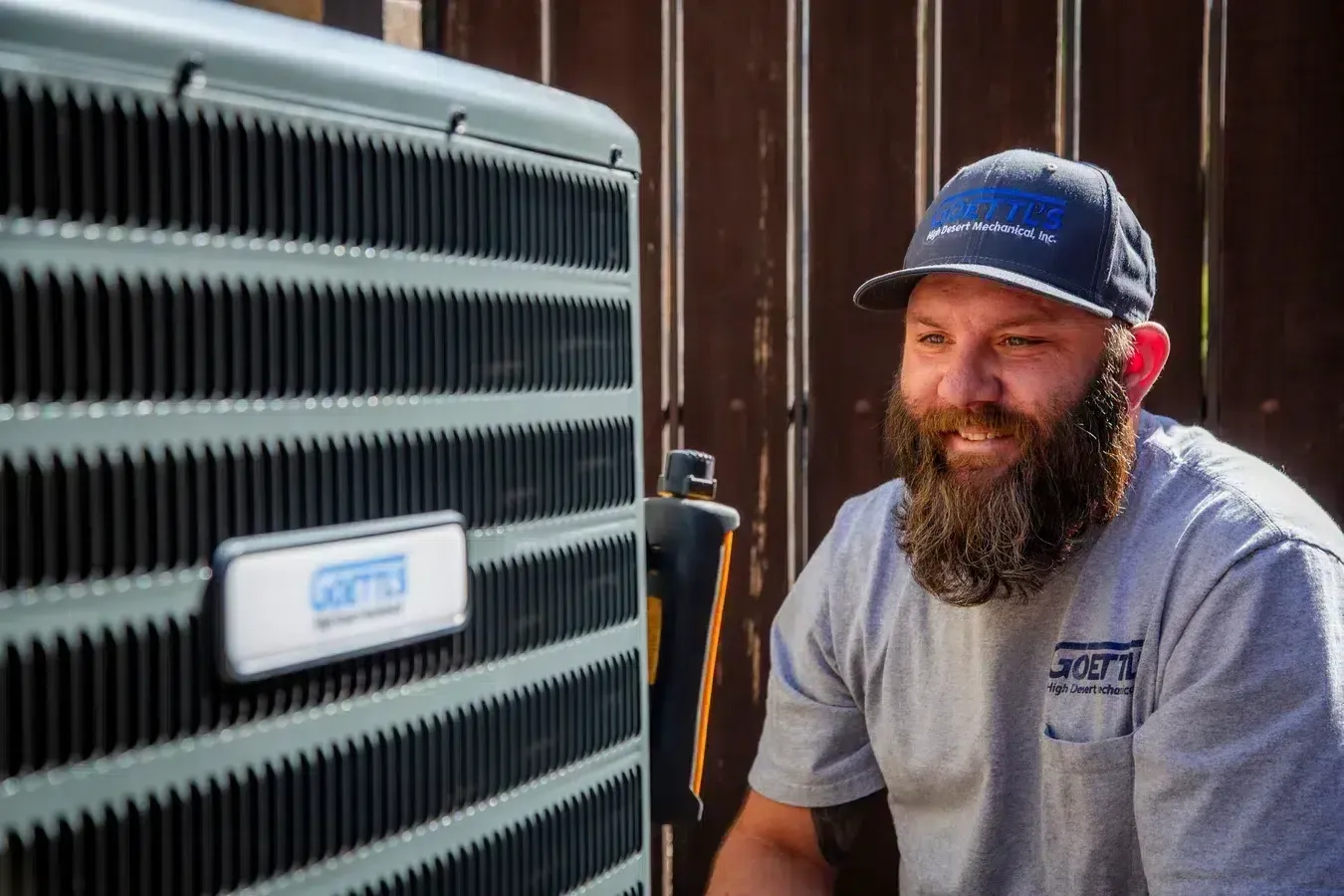
Arizona’s high desert puts air conditioning systems through some of the most demanding conditions in the country. From triple-digit summer heat to dust-laden haboobs to dramatic day-to-night temperature swings, the HVAC systems in Prescott Valley, Cottonwood, Sedona, and the Verde Valley work harder — and wear faster — than systems in more moderate climates.
At Goettl’s High Desert Mechanical, our NATE-certified Prescott Valley air conditioning technicians have been diagnosing and repairing AC systems across central and northern Arizona since 1987. These are the five AC problems we see most often, what causes them, and what to do if you’re experiencing them.
1. AC Is Running But Not Cooling
This is the most common complaint we hear, especially during the first serious heat wave of summer. The system runs, air moves through the vents, but the house won’t cool down. Several things can cause this:
Refrigerant leak
If your system is low on refrigerant due to a leak, it can’t absorb heat effectively. You may also notice ice forming on the refrigerant lines or hear a faint hissing near the unit. This requires a licensed technician — refrigerant handling is regulated and can’t be DIY’d.
Dirty condenser coils
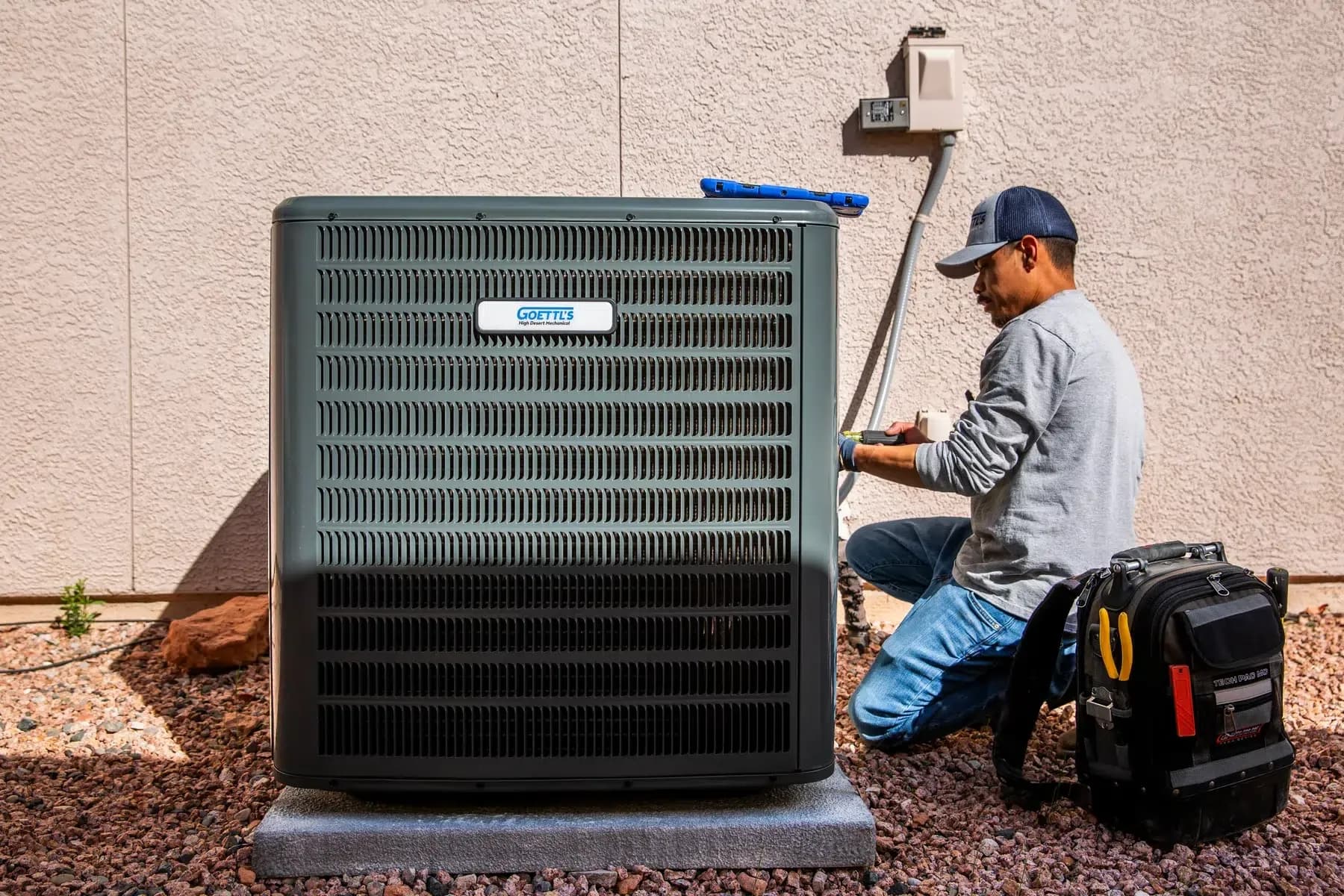
Your outdoor unit releases the heat pulled from inside your home. If the condenser coils are coated with Arizona dust and debris — especially after a haboob — the system can’t shed heat and cooling capacity drops significantly.
Undersized or aging system
A system that was marginal for your home’s square footage may keep up on a 90-degree day but fail on a 108-degree one. If your AC struggles only on the hottest days, a load calculation from a technician can tell you whether your equipment is properly sized.
2. AC Is Short Cycling
Short cycling is when your air conditioner turns on, runs briefly, shuts off, and then starts again — repeatedly — without completing a full cooling cycle. It’s hard on the compressor and one of the fastest ways to shorten the life of your system.
Common causes:
- Oversized equipment. An AC that’s too large for your home will cool the space quickly, trigger the thermostat, and shut off before completing a proper cycle. Oversizing is a surprisingly common installation mistake.
- Low refrigerant. A refrigerant leak can cause pressure imbalances that trigger the system’s safety shutoffs.
- Dirty air filter. Restricted airflow can cause the system to overheat and shut down on its thermal limit switch.
- Failing compressor. A compressor that’s struggling will sometimes start and stop erratically as it tries to build pressure.
If your system is short cycling, don’t ignore it. Every unnecessary start puts additional wear on the compressor, the most expensive component in your system.
3. Frozen Evaporator Coil
It seems strange that an air conditioner can freeze up in 100-degree weather, but it happens regularly in Arizona, and when it does, your system will blow warm or room-temperature air and may eventually stop moving air altogether.
The evaporator coil freezes when it can’t absorb enough heat, usually because:
- Airflow is restricted by a clogged air filter or blocked return vents
- Refrigerant is low, causing the coil temperature to drop below freezing
- The coil itself is dirty, reducing its ability to transfer heat
What to do: Turn the system to fan-only mode or shut it off entirely and let it thaw, which can take 2 to 24 hours depending on how much ice has built up. Check and replace your air filter. Once thawed, if the problem returns when you restart the system, call a technician. A coil that keeps freezing has an underlying problem that won’t resolve on its own.
4. Unusual Noises Coming From the System
Your AC should run with a consistent, relatively quiet hum. New or unusual sounds are almost always a sign that something mechanical needs attention.
What different sounds typically mean:
- Banging or clanking — a loose or broken component inside the air handler or compressor, such as a connecting rod, piston, or fan blade
- Squealing or screeching — often a worn fan belt or failing motor bearing
- Hissing — possible refrigerant leak, or air escaping from ductwork
- Rattling — loose panels, debris in the unit, or a failing fan motor
- Clicking at startup/shutdown — normal; clicking that continues during operation can indicate a failing relay or electrical component
Don’t wait on unusual sounds. What starts as a minor mechanical issue (a loose component, a worn bearing) can quickly escalate into a compressor failure or a full system breakdown.
5. Uneven Cooling Throughout the Home
If some rooms are comfortable while others stay stuffy and warm, the problem isn’t always the AC unit itself. Uneven cooling is one of the more complex issues to diagnose because it can have multiple contributing causes.
Common culprits in Arizona high desert homes:
- Leaky or uninsulated ductwork. Conditioned air escaping through duct leaks before it reaches certain rooms is one of the most common causes of uneven cooling, and one of the most overlooked. Goettl’s offers Aeroseal duct sealing, which pressurizes the duct system and seals leaks from the inside.
- Blocked or closed vents. Check that supply and return vents throughout the home are open and unobstructed.
- Zoning issues. Multi-story homes and larger floor plans often struggle with even cooling from a single-zone system. A zoned HVAC system or ductless mini-split for problem areas can solve what no amount of AC repairs will fix.
- Sun exposure and insulation gaps. South- and west-facing rooms with large windows absorb significant solar heat gain during Arizona afternoons. Insulated curtains or window film can reduce the load on those rooms.
When to Call a Professional
Some AC problems, like a clogged filter, a tripped breaker, a blocked outdoor unit, are things homeowners can check themselves. But refrigerant leaks, frozen coils, compressor issues, short cycling, and unusual mechanical sounds all require a trained Prescott Valley AC repair technician with the right diagnostic equipment to fix correctly and safely.
Goettl’s High Desert Mechanical provides 24/7 emergency AC repair across central and northern Arizona, including Prescott Valley, Cottonwood, Camp Verde, Dewey-Humboldt, Prescott, Sedona, Chino Valley, Flagstaff, Payson, and surrounding communities. Our NATE-certified technicians are available around the clock, because in Arizona’s high desert summer, an AC problem can’t wait.
Prefer to get ahead of problems before they happen? Our airCARE Membership includes an annual HVAC inspection, 15% off all services, priority scheduling, and priority emergency dispatch for $99 per year.
Give us a call or request service online to schedule service today.
Call Now (928) 567-22000% Interest for 18 Months
With a Qualifying HVAC System
Expires 10/31/26.

Get Your Comfort Back Fast
When something in your home isn’t working the way it should, you need a team that can fix the issue quickly and correctly. Whether you’re dealing with unexpected problems, unusual sounds, inconsistent performance, or rising utility costs, Goettl’s High Desert Mechanical has the expertise to diagnose the issue and get your home back to normal.
Call Goettl’s today to schedule your repair and let our experienced technicians restore your comfort fast.





We Cover Central and Northern Arizona
We’ve been taking care of HVAC and plumbing systems across this region since 1987. Whether you need emergency repairs in Prescott, a new system in Sedona, or maintenance in Flagstaff, we’re here for it. Here are all the areas we serve:
 All Service Areas