

Is It Time to Replace Your AC? Signs Prescott Valley Homeowners Shouldn’t Ignore
Call Now (928) 567-2200
Is It Time to Replace Your AC? Signs Prescott Valley Homeowners Shouldn’t Ignore
Is It Time to Replace Your AC? Signs Prescott Valley Homeowners Shouldn’t Ignore
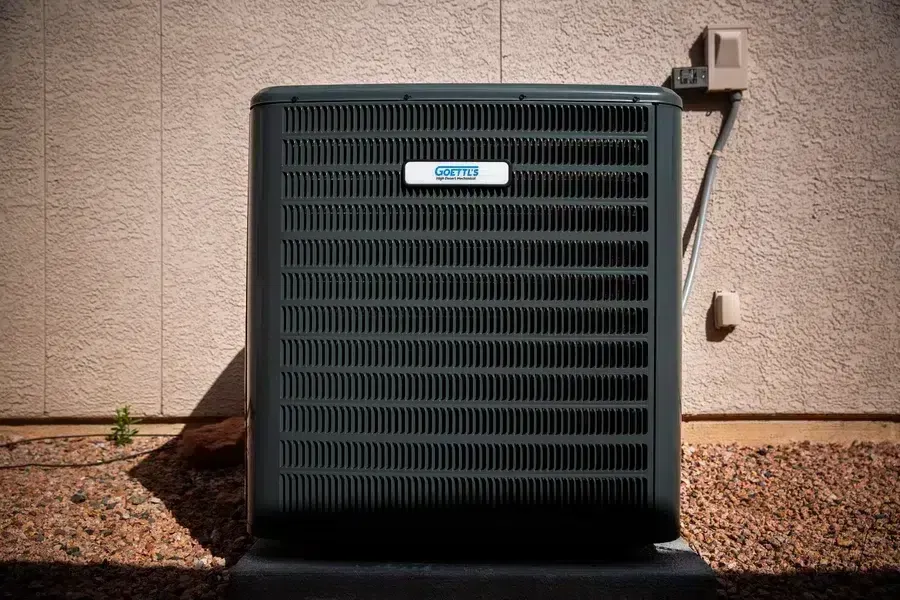
Goettl’s High Desert Mechanical helps Prescott Valley homeowners figure out whether it’s time to repair an aging AC or invest in a new one, a decision that gets a lot more urgent once Northern Arizona’s summer heat sets in.
Most systems last 10 to 15 years with regular maintenance, but it’s common for homeowners to keep patching along an older unit well past that point simply because replacement feels like the bigger expense up front. In reality, an aging AC often costs more in the long run through higher energy bills, more frequent repair calls, and less reliable cooling exactly when you need it most.
Below are the signs our Prescott Valley air conditioning service technicians look for when deciding whether your system still has good years left, or whether it’s time to start planning for a new one.
Your System Is 10–15+ Years Old
Age by itself doesn’t mean your AC needs replacing, but it’s worth checking first. Not sure when yours was installed? That’s usually a sign it’s already near or past the 10–15 year mark. Systems in that range tend to cost more to run and need more frequent repairs than newer, higher-efficiency models, even with regular maintenance.
Your Energy Bills Keep Climbing
A failing system pulls more power without cooling any better. Watch for summer electric bills that keep creeping up with no change in how you use your AC, or one unusually high bill that turns into a pattern — that’s often a sign the unit is losing efficiency. The U.S. Department of Energy estimates high-efficiency replacement systems can cut cooling costs by 20 to 50 percent compared to older units.
Repairs Keep Piling Up
Every system needs the occasional AC repair, but if you’ve replaced a capacitor, added refrigerant, and fixed wiring all in the same year, you’re patching symptoms instead of fixing the real problem. A simple rule of thumb: if a repair estimate runs more than half the cost of a new system, replacement is usually the smarter long-term move. In Prescott Valley, a typical AC repair runs somewhere in the $290–$420 range, while a full system installation typically runs $4,500–$6,100, and can climb past $9,800 for larger or high-efficiency systems.
Rooms Cool Unevenly
One room feels like a freezer, another stays warm no matter how you adjust the thermostat — sound familiar? That kind of unevenness often points to aging ductwork, weakened airflow, or a failing blower motor, not just room layout or insulation. It shows up most often upstairs or in rooms farthest from the air handler.
Your Home Feels More Humid Than Usual
Pulling moisture out of the air is half of what your AC is supposed to do. As components wear down, that humidity control fades first — you might notice fogged windows, a musty smell, or air that feels heavy even when the temperature seems fine. Left alone, extra indoor humidity can lead to mold growth and make your home feel warmer than the thermostat says it is.
You Hear Grinding, Screeching, or Hissing
A faint hum is normal. Grinding, screeching, or hissing isn’t. Grinding or banging usually points to a failing compressor or a loose part, screeching often means a worn belt or motor bearing, and hissing can signal a refrigerant leak. These sounds tend to show up before a full system failure, especially if they keep coming back after a repair visit.
Your System Runs Constantly Without Cycling Off
A healthy AC cycles on and off throughout the day. Yours running almost nonstop is a sign it’s working harder than it should, often because of low refrigerant, a weakening compressor, or a system that was never sized right for your home. That constant strain wears out parts faster and eats into whatever lifespan the unit has left.
The Unit Shows Visible Rust or Wear
What your AC looks like on the outside often tells you what’s happening on the inside. Rust, corrosion, bent fins, or standing water near the base can affect airflow, cooling speed, and electrical components, and they usually mean a sudden failure is more likely, not just a slow decline.
AC Repair vs Replacement FAQ
How do I know if I should repair or replace my AC?
What’s the average lifespan of an air conditioner in Arizona’s heat?
Is it cheaper to repair or replace an AC unit?
Does Goettl’s offer financing for a new AC system?
Not Sure Which It Is? Let Goettl’s Take a Look
If any of this sounds familiar, Goettl’s High Desert Mechanical can take a look and give you a straight answer, repair or replace, with upfront pricing either way. Our NATE-certified technicians have served Prescott Valley and Northern Arizona since 1987, and our airCARE Membership ($99/year) can catch small issues like these before they turn into a full system replacement.
Call Now (928) 567-2200
Get Your Comfort Back Fast
When something in your home isn’t working the way it should, you need a team that can fix the issue quickly and correctly. Whether you’re dealing with unexpected problems, unusual sounds, inconsistent performance, or rising utility costs, Goettl’s High Desert Mechanical has the expertise to diagnose the issue and get your home back to normal.
Call Goettl’s today to schedule your repair and let our experienced technicians restore your comfort fast.





We Cover Central and Northern Arizona
We’ve been taking care of HVAC and plumbing systems across this region since 1987. Whether you need emergency repairs in Prescott, a new system in Sedona, or maintenance in Flagstaff, we’re here for it. Here are all the areas we serve:
 All Service Areas