

Why Is My Furnace Blowing Cold Air?
Call Now (928) 567-2200
Why Is My Furnace Blowing Cold Air?
Why Is My Furnace Blowing Cold Air?
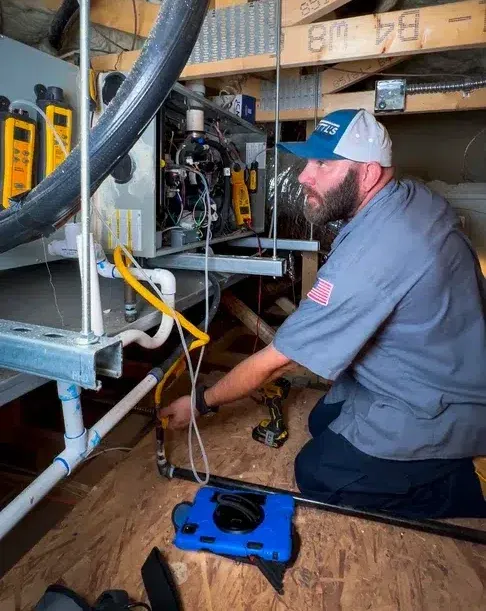
It's the first really cold night of fall in Prescott Valley. The temperature drops fast once the sun goes down, so you switch the thermostat from "cool" to "heat" for the first time since spring. A few minutes later you hold your hand up to the vent and feel cold air. What's going on?
The short answer: a furnace or heat pump that blows cold air usually has one of seven problems. The thermostat is set wrong, the air filter is clogged, the ignition or flame sensor isn't working, there's a gas supply issue, the condensate drain is blocked, the ducts are leaking, or (for heat pumps) the system is in defrost mode or low on refrigerant. Some of these you can check yourself in five minutes. Others need a licensed Prescott Valley HVAC technician.
This guide walks through each cause, starting with the easiest fixes, so you know when to handle it yourself and when to call Goettl's High Desert Mechanical for furnace repair in Prescott Valley or beyond.
Start at the Thermostat
Before you assume the worst, look at your thermostat. A surprising number of "no heat" calls in the first weeks of heating season come down to a setting.
- Is it set to "Heat"? After a long cooling season, it's easy to leave it on "Cool" or "Off."
- Is the fan set to "On" instead of "Auto"? With the fan on "On," the blower runs all the time, including between heating cycles when the burners are off. That air will feel cool. Switch it to "Auto" so the fan runs only while the system is heating.
- Is the set temperature higher than the room temperature? If not, the system has no reason to turn on.
- Are the batteries dead? A blank or dim screen is a common sign. Replace them and try again.
If the thermostat checks out and the air is still cold, keep reading.
Is It Cold, or Just Not Hot?
It helps to know what "normal" feels like for your system:
- Gas furnaces usually deliver air in the 120–140°F range once they're running. It should feel clearly hot. It's normal for the first 30–60 seconds of a cycle to feel cool while the heat exchanger warms up.
- Heat pumps deliver gentler heat, often around 85–100°F. That can feel lukewarm against your hand even when the system is working correctly, especially on a cold night. If your house is reaching the temperature you set, a heat pump that "feels cool" at the vent is probably fine.
If your home isn't warming up at all, or the air is truly room temperature or colder, one of the causes below is likely.
7 Reasons Your Furnace or Heat Pump Is Blowing Cold Air
1. Clogged Air Filter
A dirty filter is one of the most common causes, and the easiest to fix. When airflow is choked off, the furnace can overheat. A safety device called the high-limit switch then shuts the burners off to protect the equipment, while the blower keeps running and pushes unheated air through your vents.
What to do: Pull the filter and look at it. If it's gray and caked with dust, replace it. Many northern Arizona homes need a new filter every 1–3 months, and sooner during dusty, windy stretches or wildfire smoke.
2. Pilot Light, Igniter or Flame Sensor Problem
Most modern gas furnaces use an electronic igniter instead of a standing pilot light. After sitting idle all summer, a common problem is a dirty flame sensor. The burners light for a few seconds, the sensor can't confirm the flame, and the furnace shuts the gas off as a safety measure. You may hear it click on and off repeatedly while the blower runs cold air.
What to do: On an older furnace with a standing pilot, you can check whether the pilot is lit using the relighting instructions on the unit. For electronic ignition and flame sensor problems, call a technician. These parts sit next to the gas valve and burners.
3. Gas Supply Issue
If the furnace isn't getting fuel, it can't make heat. Check whether the gas valve near the furnace is open (the handle lines up with the pipe). If your home runs on propane, which is common in rural parts of our service area, check the tank level. An empty or nearly empty tank is a frequent first-cold-night surprise.
Safety first: If you smell gas (a rotten-egg odor), don't touch light switches or try to relight anything. Leave the house and call your gas utility company or 911 from outside.
4. Clogged Condensate Line (High-Efficiency Furnaces)
High-efficiency furnaces produce water as they run, and that water drains away through a condensate line. If the line clogs, a safety switch shuts the burners down to prevent water damage, and the blower may keep moving unheated air. You might also notice water pooling around the furnace. Our guide on what to do when your furnace is leaking water covers this in more detail.
5. Leaky or Disconnected Ductwork
Sometimes the furnace is making plenty of heat, but it never reaches you. Ducts that run through an attic or crawlspace can crack, separate or leak at the joints. Warm air escapes into those unheated spaces and cold air gets pulled in, so some rooms feel chilly even while the system runs. Duct sealing, including Aeroseal, can fix leaks that are hard to reach by hand. Learn more in our post on how air duct sealing saves energy.
6. Your Heat Pump Is in Defrost Mode
This one isn't a problem at all, but it catches many heat pump owners off guard. When it's cold and damp outside, frost builds up on the outdoor coil. To clear it, the heat pump briefly reverses direction and warms the outdoor coil. During that time you may feel cooler air at the vents. You might also see steam rising from the outdoor unit and notice its fan stop.
A defrost cycle normally lasts a few minutes, and then regular heating resumes. If the cold air lasts much longer, or the outdoor unit is covered in thick ice that doesn't clear, call for service.
7. Heat Pump Refrigerant or Component Problem
A heat pump moves heat with refrigerant, just like your AC does in summer. If it's low on refrigerant because of a leak, or if a part like the reversing valve fails, it can't collect enough heat to warm your home. These are repairs for a certified technician, and they're the same kinds of issues covered in our Why Is My AC Blowing Hot Air? guide, just in reverse.
Heat Pumps in High-Desert Winters: Aux Heat, Emergency Heat and Dual Fuel
Many homes across central and northern Arizona use heat pumps, and some pair them with a gas furnace in a dual-fuel system. A few terms explain a lot of "cold air" confusion:
- Auxiliary ("Aux") heat is backup heat, usually electric heat strips, that turns on automatically when the heat pump can't keep up on its own, such as on a very cold night. Seeing "Aux" on your thermostat now and then is normal.
- Emergency heat ("Em Heat") is a setting you turn on manually. It shuts off the heat pump and runs only the backup heat. Use it only if the heat pump has stopped working and you're waiting for a repair. It works, but it costs much more to run.
- Dual-fuel systems switch from the heat pump to the gas furnace once the outdoor temperature drops below a set point. If that switchover isn't happening, you may feel lukewarm air on your coldest nights. Read more about dual-fuel HVAC systems.
Winter looks different across our service area. Cottonwood and Camp Verde see milder nights. Prescott Valley and Dewey-Humboldt get regular freezes. Flagstaff, at around 7,000 feet, gets true mountain winters. A system sized and set up for your elevation makes a big difference. If your heat pump struggles every winter, our heat pump team can help you figure out why.
That Burning Smell the First Time You Turn On the Heat
A faint burning or dusty smell the first time you run your furnace each fall is usually normal. It's dust burning off the heat exchanger after months of sitting idle, and it should fade within an hour or so. If the smell is strong, smells electrical or like melting plastic, or doesn't go away, turn the system off and call a technician. Make sure your carbon monoxide detectors are working before heating season starts, too.
When to Call a Pro
You can safely check the thermostat, the air filter, the gas valve position and your propane level. Call a licensed HVAC technician if:
- The furnace clicks on and off repeatedly without staying lit
- You smell gas (leave the house first, then call)
- Water is pooling around the furnace
- The heat pump's outdoor unit is iced over and stays that way
- Your home isn't warming up even though the system seems to be running
- Your carbon monoxide detector goes off (get everyone outside and call 911)
Prevent Cold-Air Surprises With a Fall Tune-Up
Most of the problems above, including dirty flame sensors, clogged condensate lines, refrigerant leaks and worn igniters, can be caught during a routine inspection before the first cold snap. A professional furnace maintenance visit each fall keeps your system running safely and efficiently. It also keeps you from finding a problem on the coldest night of the year.
Get Your Heat Back Fast
Whether you're in Prescott Valley, Prescott, Dewey-Humboldt, Cottonwood, Camp Verde, Flagstaff or elsewhere in central and northern Arizona, the NATE-certified technicians at Goettl's High Desert Mechanical can diagnose the problem and get warm air flowing again. We've served the region since 1987, and our 24/7 emergency service means you won't be left in the cold overnight.
Call our Prescott Valley heating repair pros or book online today!
Get Your Comfort Back Fast
When something in your home isn’t working the way it should, you need a team that can fix the issue quickly and correctly. Whether you’re dealing with unexpected problems, unusual sounds, inconsistent performance, or rising utility costs, Goettl’s High Desert Mechanical has the expertise to diagnose the issue and get your home back to normal.
Call Goettl’s today to schedule your repair and let our experienced technicians restore your comfort fast.





We Cover Central and Northern Arizona
We’ve been taking care of HVAC and plumbing systems across this region since 1987. Whether you need emergency repairs in Prescott, a new system in Sedona, or maintenance in Flagstaff, we’re here for it. Here are all the areas we serve:
 All Service Areas